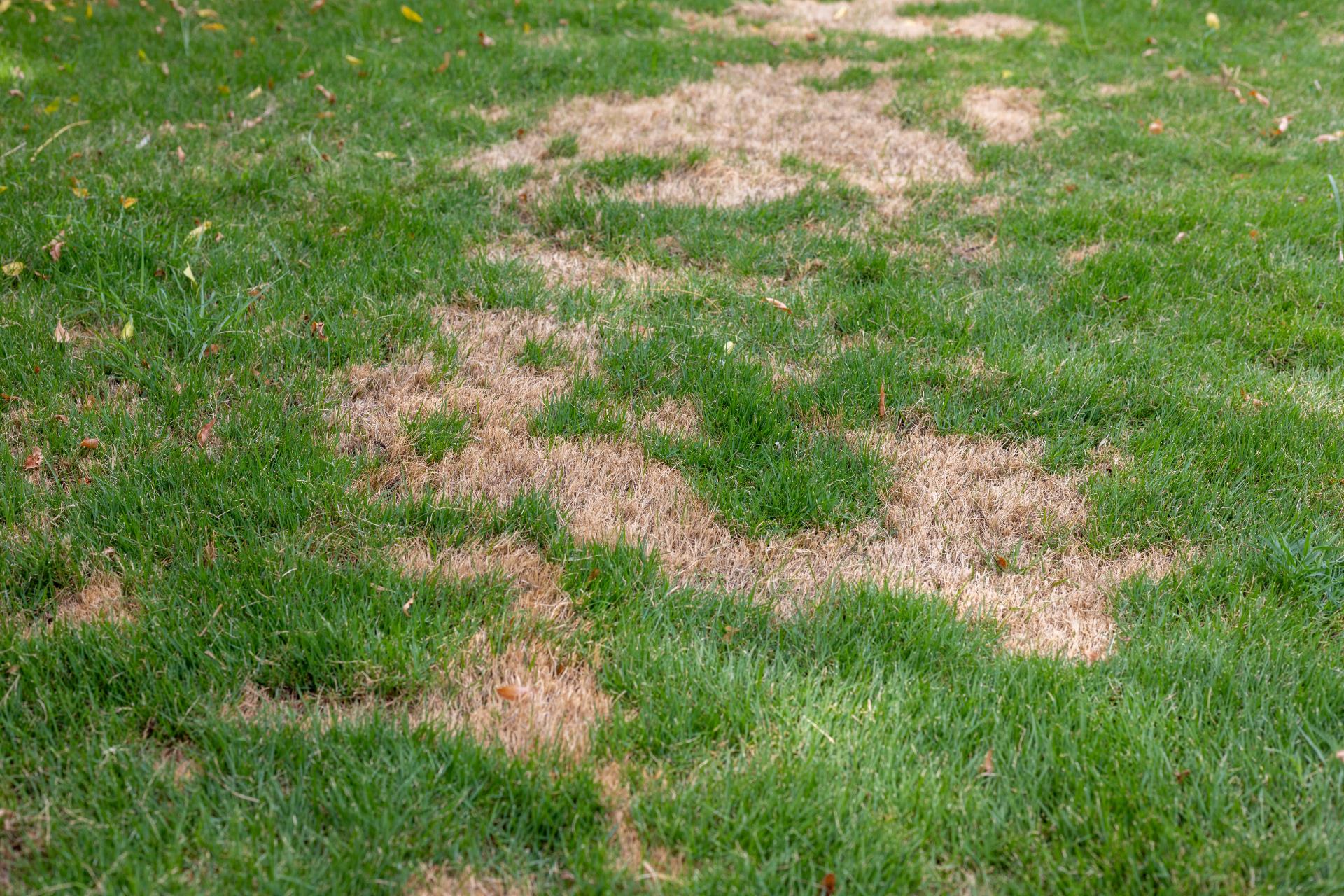
Why Your Lawn Has Brown Patches (And How to Figure Out Which Problem You Have)
Brown patches can come from six different problems — and each one needs a different fix. Here's how to read the pattern, use a simple tug test, and figure out whether you're dealing with dormancy, burn, dog spots, grubs, disease, or drought.
Why Your Lawn Has Brown Patches (And How to Figure Out Which Problem You Have)
Published on LawnMaps.com | Estimated read time: 5 minutes
Brown patches are the most common lawn worry there is — and also the most commonly misdiagnosed. The trouble is that half a dozen completely different problems all end in the same place: tan, dead-looking grass. And each one has a different fix. Grub killer won't touch a fungus. Fertilizer will make burn worse. Watering a dormant lawn the wrong way can actually kill it.
So before you buy anything, it's worth spending five minutes figuring out what you're actually dealing with. The good news is that each cause leaves its own fingerprints, and you can read most of them without any special tools.
Here's how to narrow it down.
Start with three quick questions
Walk out to the brown area and ask yourself these before anything else.
1. What's the shape and pattern? Is the whole lawn evenly tan? Are there sharp-edged stripes or blotches? Lots of small spots? A few big rings? The pattern alone rules out half the possibilities.
2. What happened recently? Did you fertilize in the last week? Has it been hot and dry for a while? Hot and muggy? Does your dog favor that corner of the yard? Timing is a huge clue.
3. What happens when you tug it? Grab a handful of the brown grass and pull gently. Does it hold firm? Pull out with roots? Or lift up like a loose piece of carpet? This one test separates several causes instantly.
The six usual suspects
1. Summer dormancy
What it looks like: The whole lawn — or most of it — turns evenly tan during a stretch of hot, dry weather. Usually you'll see the same thing happening up and down the street.
The tell: It's uniform, it follows the heat, and the grass holds firm when you tug it.
What's going on: Cool-season grass goes into a kind of survival mode in summer heat. It looks dead but it's really just asleep, and it greens back up when cooler weather and rain return. Nothing's wrong.
→ Read more: Summer Dormancy: Why the Whole Street Is Brown and You Don't Have to Be
2. Fertilizer burn
What it looks like: Crispy, straw-colored grass in a shape that matches how you applied your fertilizer — spreader stripes, a spill-shaped blotch, or a spot where you stopped to refill.
The tell: Sharp, clean edges and it showed up within a few days of fertilizing. Diseases almost never draw a straight line.
What's going on: Too much fertilizer in one spot pulls moisture out of the grass. The fix is deep watering to flush it out — never more fertilizer.
→ Read more: Fertilizer Burn: What Happened, and How to Bring Your Lawn Back
3. Dog spots
What it looks like: Round brown spots, often a few inches to a foot across, frequently with a ring of extra-dark green grass around the edge.
The tell: They show up where your dog goes, and that dark-green halo is a giveaway.
What's going on: Dog urine is loaded with nitrogen — the same mechanism as fertilizer burn. The center gets too much and burns, while the diluted edge gets a nice feeding. Water the spot thoroughly after your dog goes, and the fertilizer burn article's recovery steps apply here too.
4. Grubs
What it looks like: Irregular brown patches that keep growing, usually in late summer or fall. You may also notice skunks, raccoons, or birds digging up the lawn.
The tell: When you tug the brown grass, it peels up like a loose rug, with almost no roots attached.
What's going on: Grubs — beetle larvae living in the soil — eat the grass roots, so there's nothing holding the turf down. Peel back a square foot and count: around 5–10 or more grubs per square foot means it's time to treat.
→ Read more: Grub Damage: What to Do When Your Lawn Peels Up Like a Toupee
5. Lawn disease (fungus)
What it looks like: Depends on the disease. Dozens of small, silver-dollar-size tan spots usually point to dollar spot. A handful of large rings, a few feet across, usually point to brown patch (yes, a disease actually named brown patch).
The tell: It shows up after warm, humid weather or long stretches of wet grass, and the spots often grow or multiply over days. Early in the morning you may see cottony webbing or a grayish "smoke ring" around the edges.
What's going on: Fungus is always in your soil, but it takes off when the weather favors it. The two most common summer diseases need nearly opposite fertilizer advice, so getting the ID right matters.
→ Read more: What Is Lawn Fungus and How Do You Fix It? for the big picture, and Dollar Spot vs. Brown Patch: How to Tell Them Apart and Fix Each for the two most common culprits
6. Drought stress or watering problems
What it looks like: Brown, dry areas in specific spots rather than the whole lawn — often along driveways and sidewalks, on slopes, in areas the sprinkler misses, or over shallow or compacted soil.
The tell: The grass has a dull, blue-gray tint before it browns, and footprints stay visible long after you walk on it. A screwdriver is hard to push into the soil.
What's going on: Those areas dry out faster than the rest of the lawn. Concrete radiates heat, slopes shed water, and sprinklers rarely cover perfectly. Deep, early-morning watering and checking your sprinkler coverage usually solves it.
→ Read more: How to Water Your Lawn the Right Way and Why Your Lawn Turns Brown Along the Road First
The quick-ID cheat sheet
| What you see | Tug test | Most likely cause |
|---|---|---|
| Whole lawn evenly tan in hot, dry weather | Holds firm | Summer dormancy |
| Sharp-edged stripe or blotch, right after fertilizing | Holds or pulls out dry | Fertilizer burn |
| Round spot with a dark-green ring | Holds or pulls out dry | Dog spot |
| Spreading patches in late summer/fall, animals digging | Peels up like carpet | Grubs |
| Many small spots or a few large rings after humid weather | Holds firm | Lawn disease |
| Dry spots near pavement, on slopes, or where sprinklers miss | Holds firm | Drought stress |
What to do next
- Read the pattern and timing before you buy any product.
- Do the tug test. If it peels up like carpet, check for grubs first.
- Match the fix to the cause using the linked guides above — most brown patches need water and patience, not chemicals.
- Give it two weeks. A lot of brown grass is stressed, not dead. Once you've fixed the cause, look for new green growth at the base before you decide to reseed.
- Reseed only what's truly dead, and time it right — for cool-season lawns, early fall is the best window.
When you do need to treat or reseed, getting the amount right matters as much as picking the right product. Map your lawn for free at LawnMaps.com to measure the affected zones and calculate exactly how much product or seed you need. And since heat, humidity, and soil temperature drive most of these problems, keeping an eye on your soil temperature in your LawnMaps dashboard helps you see trouble coming before the brown shows up.