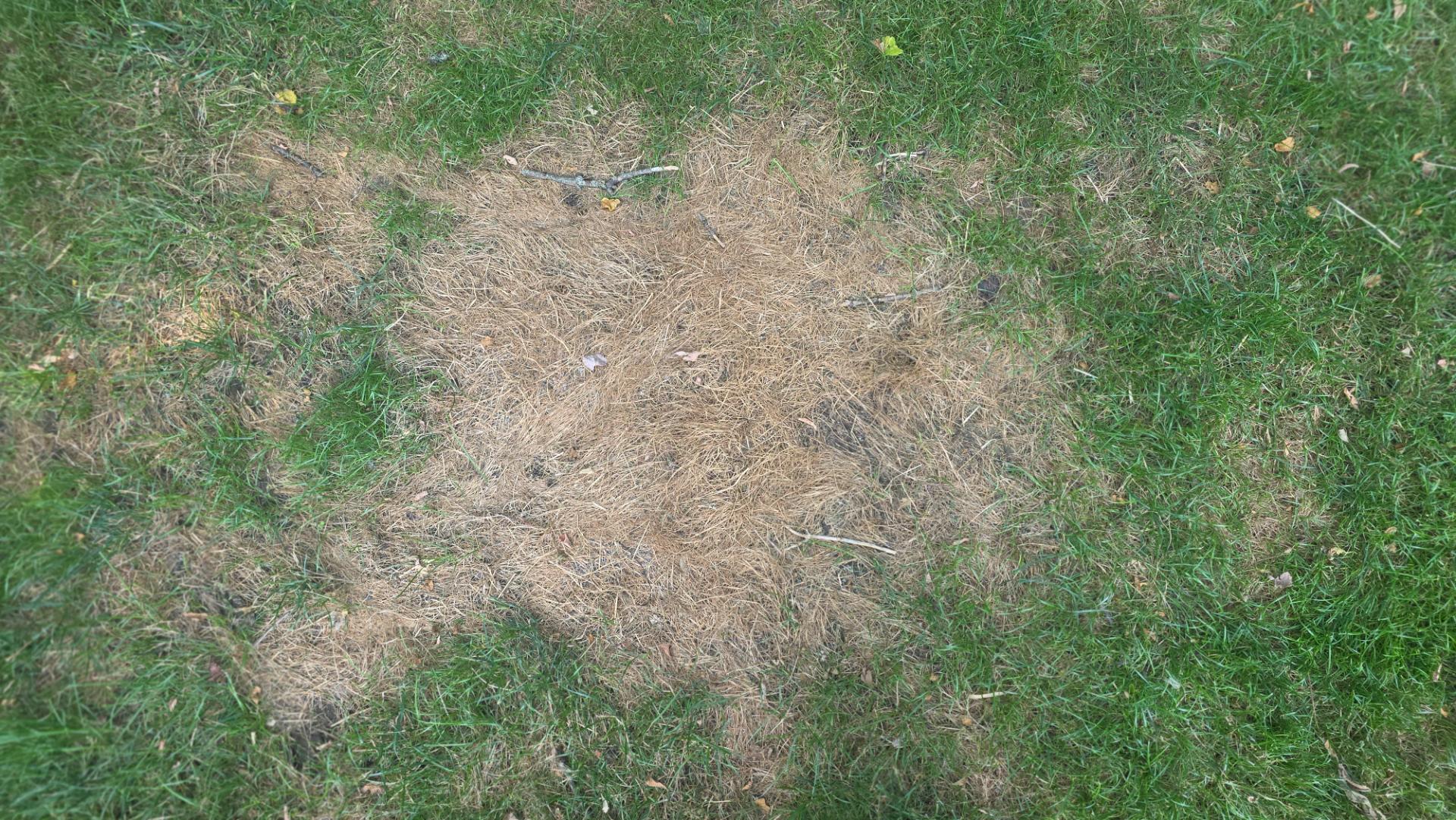
Fertilizer Burn: What Happened, and How to Bring Your Lawn Back
Fertilized your lawn and got a crispy brown patch instead of a green one? That's fertilizer burn — and it looks far worse than it usually is. Here's how to tell it apart from disease, flush the salt out to save your grass, and make sure it never happens again.
Fertilizer Burn: What Happened, and How to Bring Your Lawn Back
Published on LawnMaps.com | Estimated read time: 5 minutes
You fertilized your lawn expecting it to green up — and a few days later you're staring at a crispy, straw-colored patch instead. Maybe it's a stripe where your spreader overlapped, or a blotch where the bag tipped over, or a shape that suspiciously matches where your dog likes to hang out. That's fertilizer burn, and the good news is it looks a lot scarier than it usually is. Most burned lawns bounce back, and the fix is mostly patience plus water.
Let's walk through what actually happened, how to tell burn apart from a lawn disease, and exactly what to do next.
What fertilizer burn actually is
Fertilizer is basically a concentrated dose of mineral salts — nitrogen, potassium, and other nutrients your grass needs. In the right amount, those salts feed the plant. In too high a concentration, they do the opposite: they pull moisture out of the grass blades and roots through a process called osmosis. The grass essentially gets dehydrated from the inside, even if the soil is damp.
That's why fertilizer burn shows up as dry, brown, straw-like grass. The plant didn't starve — it got desiccated by salt.
A few things push a normal application over the line into burn territory:
- Too much product in one spot — a spreader overlap, a spill, or stopping the spreader while it's still dropping fertilizer.
- Applying to wet grass — granules stick to damp blades instead of falling to the soil, concentrating the salt right on the leaf.
- Not watering it in — fertilizer that sits on the surface in the heat has no chance to dilute.
- Quick-release fertilizer — cheaper "quick-release" nitrogen dumps all at once, which is easy to overdo. (Slow-release products meter it out and are much more forgiving.)
- Pet urine — not technically from your fertilizer, but the exact same mechanism. A concentrated shot of nitrogen salts, which is why dog spots look identical to burn.
How to tell it's burn and not a disease
This matters, because the fix for burn is completely different from the fix for a fungus — and treating the wrong problem wastes time and money. Here's how they differ:
| Clue | Fertilizer burn | Lawn disease |
|---|---|---|
| Edges | Sharp, defined — often a stripe, streak, or clean shape | Soft, irregular, blotchy |
| Pattern | Matches how you applied (spreader lines, spill shape) | Random spots or spreading rings |
| Timing | Appears within a few days of fertilizing | Appears after heat, humidity, or heavy rain |
| Spreading | Doesn't spread — the damage is done | Often grows or multiplies over days |
| History | You recently fertilized | No recent feeding |
If your brown patch has crisp borders and it showed up right after you fed the lawn, it's burn. The clean edge is the biggest giveaway — a disease rarely draws a straight line. (If you're still unsure and the patch keeps growing, that points toward fungus instead, and it's worth reading up on lawn disease separately.)
What to do right now
If you catch it early — within a day or two — you can limit the damage. If it's already brown, you're now in recovery mode. Either way, water is your first move.
1. Water deeply, and keep watering. This is the single most important step. Watering flushes the excess salt down past the grass roots so it stops pulling moisture out of the plant. Soak the burned area and the grass around it with about an inch of water, then water heavily again each day for the next 3 to 5 days. You're trying to rinse the salt out of the root zone, so err on the side of too much rather than too little.
2. Stop fertilizing the area. Don't try to "fix" burned grass by feeding it more — that's adding salt to an already over-salted spot. Give it a full break.
3. Wait and watch. Grass that's damaged but still alive will start pushing new green growth from the crown (the base of the plant) within one to two weeks of good watering. Resist the urge to dig anything up before then. A lot of patches that look completely dead are just stressed, and they green back up on their own.
4. Test whether it's actually dead. After a couple of weeks of watering, give a handful of the brown grass a gentle tug. If it holds firm and you see any green at the base, it's recovering — keep watering. If it pulls out easily with no resistance and the crown is brown and dry, that section is gone and you'll need to reseed.
If you have to reseed the patch
Some burns — especially heavy spills or old pet spots — kill the grass all the way down. That's fixable too, it just takes a reset:
- Rake out the dead grass to expose the soil underneath.
- Rinse the spot with a good long soak first, to wash out any leftover salt before you plant. New seed won't germinate in salty soil.
- Loosen the top inch of soil and spread fresh seed that matches your existing lawn.
- Keep it consistently moist until the new grass is established.
Timing matters here: cool-season lawns (like fescue and bluegrass) seed best in early fall, when soil temperatures are ideal for germination and the weather is on your side. Warm-season lawns prefer late spring into early summer. LawnMaps tracks the soil temperature for your specific property, so you can see exactly when your seeding window opens instead of guessing — check your dashboard before you buy a bag of seed.
How to never do this again
Fertilizer burn is almost entirely preventable once you know the traps. Keep these in mind next time:
- Apply to dry grass, then water it in. Fertilize when the blades are dry so granules fall to the soil, then give the lawn a good soak within 24 hours to move the nutrients down to the roots. This one habit prevents the majority of burns.
- Use slow-release fertilizer. It's much harder to burn your lawn with a slow-release product because the nitrogen is released gradually. Beginners are almost always better off starting here.
- Calibrate your spreader and keep it moving. Never stop, turn, or refill the spreader while it's over the grass — that's how you dump a concentrated pile in one spot. Refill on the driveway or a tarp.
- Don't guess on the amount. Over-application is the number one cause of burn, and it usually comes from not knowing your lawn's real square footage. If you put down the right rate for your actual area, you're very unlikely to burn anything.
That last point is where a lot of homeowners quietly go wrong — they eyeball the lawn size, round up "to be safe," and end up applying way more product than the grass can handle. You can measure your lawn for free at LawnMaps.com to get your exact square footage, then calculate precisely how much fertilizer you need — no more, no less. It's the difference between a green lawn and a spotted one.
The takeaway
Fertilizer burn looks like a disaster and is usually a minor setback. If your grass is showing crisp-edged brown patches right after feeding, it's burn, not a bug or a fungus. Water deeply for several days to flush the salt, stop fertilizing the spot, and give it two weeks — most of it will recover on its own. Anything that's truly dead can be raked out and reseeded in the right season. And next time, feed dry grass with a slow-release product at the right rate for your measured lawn size, and you'll never see a patch like this again.