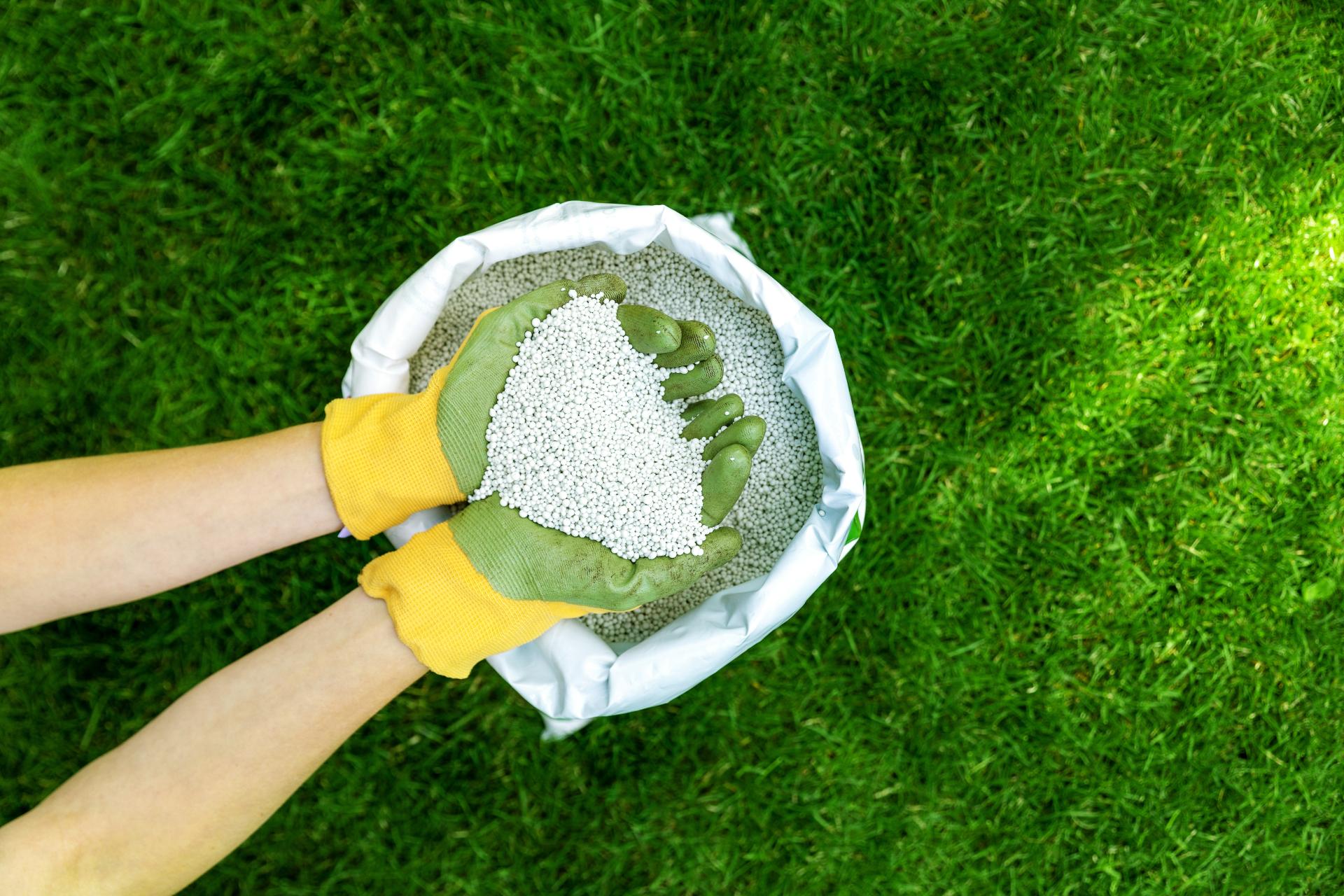
Summer Lawn Feeding: Why Less Nitrogen Is More (and What to Use Instead)
That tired-looking lawn in July does *not* want the same fertilizer you used in April — at least not if it's a cool-season grass. Heavy nitrogen in summer heat invites disease, burns energy your lawn needs to survive, and means more mowing in the worst weather. Here's the smarter summer feeding strategy: back off the nitrogen, lean on potassium and iron, and often, do less than you think.
Summer Lawn Feeding: Why Less Nitrogen Is More (and What to Use Instead)
Published on LawnMaps.com | Estimated read time: 5 minutes
It's the middle of July, your lawn looks a little tired, and your gut says: time to feed it. So you reach for the same bag of fertilizer that made it explode with green growth back in April.
Don't.
For cool-season lawns, that springtime feeding instinct is one of the easiest ways to hurt your grass in the heat of summer. The good news is that the right summer feeding strategy is actually less work, not more — you back off the heavy stuff and lean on two things that make your lawn tougher and greener without the downside. Let's get into it.
First, What Those Three Numbers Mean
Every bag of fertilizer has three numbers on it, like 24-0-6 or 6-4-0. That's the N-P-K, and it tells you the percentage of three nutrients inside:
- N is Nitrogen — the "green and grow" nutrient. It drives leafy top growth and deep color. This is the big one in spring fertilizers.
- P is Phosphorus — the "root and establish" nutrient. Useful for new lawns and seeding, but often restricted by law because of water runoff, so you'll see a lot of zeros in that middle spot.
- K is Potassium — the "health and toughness" nutrient. It doesn't make your lawn greener or push growth. Instead, it helps the grass handle stress: heat, drought, disease, and cold.
Hold onto those last two — N drives growth, K drives toughness — because the whole summer strategy comes down to dialing one down and the other up.
Why You Back Off Nitrogen in Summer
Here's the thing about nitrogen: it forces your grass to grow, whether that's a good idea or not.
In spring, that's exactly what you want. But by midsummer, cool-season grasses — Kentucky bluegrass, fescue, and ryegrass (the grasses that thrive in cooler climates and go a bit dormant in heat) — are already under stress. Pushing a flush of tender new growth in 90-degree weather causes real problems:
- It burns energy your lawn needs to survive. Hot, stressed grass is in conservation mode. Forcing growth drains the reserves it's trying to hold onto.
- Tender growth invites disease. Lush, nitrogen-fed grass in summer heat and humidity is a buffet for lawn fungus like brown patch. You're basically setting the table.
- It means more mowing and more watering during the exact stretch of the year you'd rather not be out there sweating.
- The burn risk goes up. Heavy nitrogen on a hot, dry lawn can scorch it outright.
So for cool-season lawns, summer is not the season to push nitrogen. Restraint is the move.
One Big Exception: Warm-Season Grass
If you live in the South and have warm-season grass — Bermuda, zoysia, St. Augustine, or centipede — flip everything I just said. Summer is their peak growing season, and they genuinely want nitrogen now. This low-nitrogen advice is a cool-season summer strategy.
Not sure which type you have? That's a whole topic of its own (and one we'll cover soon) — but as a quick gut check: if your lawn looks its best in spring and fall and struggles in peak heat, it's almost certainly cool-season, and this article is for you.
Potassium: The Summer MVP
If you're putting anything nutritional down in summer, potassium is the nutrient that earns its keep. It works behind the scenes — strengthening cell walls and helping the plant regulate water — so your grass holds up better against drought, heat, and disease.
It won't give you a dramatic before-and-after. What it does is help your lawn endure the summer instead of trying to grow through it. That's why summer or "stress" fertilizer blends carry a low first number (N) and a meaningful third number (K).
Iron: Deep Green Without the Growth
So if you're laying off nitrogen, how do you keep that rich green color everyone's after? Iron.
Iron is the secret weapon of summer lawns. It produces a deep, almost blue-green color — without forcing the growth flush that nitrogen does. You get the look you want, minus the extra mowing, the disease risk, and the stress on the plant. For a summer lawn, that's the whole dream.
A few forms you'll run into:
- Liquid (chelated) iron — sprayed on, absorbed through the leaf, greens up fast. The trade-off is it's temporary, usually lasting a few weeks, so it's more of a touch-up.
- Granular iron products — slower and longer-lasting, spread like normal fertilizer.
- Milorganite — a popular, beginner-friendly organic option. It's a slow-release, low-nitrogen product (around 6-4-0) with iron built in, and it's very hard to burn your lawn with. Honestly, it's a great "I just want something safe and simple for summer" pick.
One practical warning: iron stains. It will leave rust-colored marks on concrete, pavers, brick, and stone. Sweep any product off your driveway and sidewalks before watering, and be careful with liquid iron near light-colored hardscaping.
What to Actually Put Down
Here's how to translate all of that into a bag at the store:
| Goal | What to Look For |
|---|---|
| Summer color + toughness | A "summer" or "stress" blend: low N, decent K, added iron |
| Safe, simple, low-effort | A slow-release low-N product like Milorganite |
| Just color, fast | A liquid iron foliar spray for a temporary green-up |
| ❌ Avoid | High-nitrogen "quick green" spring formulas in peak heat |
A Few Rules for Applying in the Heat
- Don't feed a bone-dry, dormant lawn. If your grass has gone crispy and brown to survive a drought, leave it be — feeding it then does more harm than good. Make sure it's actually growing first. (Our watering guide covers how to keep it out of that crispy zone in the first place.)
- Apply in the cool part of the day — early morning or evening, not the blazing afternoon.
- Water in granular products so they break down and reach the roots. The exception is foliar liquid iron, which is meant to absorb through the leaf — so hold off on watering that one in right away.
- Don't guess on the amount. Over-applying in summer is exactly how you get fertilizer burn. Fertilizer is rated by the 1,000 square feet, so you need to know your lawn's size to set your spreader correctly and avoid putting down too much.
That last point is where a lot of summer lawn damage comes from — eyeballing the rate. Map your lawn for free at LawnMaps.com to get your exact square footage by zone, so you can dial in the right amount and skip the guesswork.
Honestly? You Might Not Need Much at All
Here's the part most fertilizer ads won't tell you: if you fed your cool-season lawn properly in spring, you may not need to do much in summer beyond a light touch of iron for color. Summer feeding is about restraint, not abundance. Sometimes the best thing you can do for a hot, stressed lawn is to keep it watered, mow it high, and otherwise leave it alone until fall — when cool-season grass wakes back up and that's the time to feed it well again.
Your Summer Feeding Game Plan
- Confirm you've got cool-season grass. (Warm-season lawns want nitrogen now — opposite playbook.)
- Skip the high-nitrogen spring fertilizer. Save it for fall.
- Reach for a low-N, higher-K "summer" blend, or a slow-release option like Milorganite — bonus points if it includes iron.
- Use iron for color without forcing growth. Keep it off the concrete.
- Apply in the cool of the day, at the right rate for your square footage, and water granular products in.
- When in doubt, do less. A well-watered, high-mowed lawn often coasts through summer just fine on its own.
Summer isn't the season to chase a growth spurt — it's the season to help your lawn survive and stay handsome until fall's real feeding window opens up. Less nitrogen, a little potassium, a touch of iron, and a lot of restraint will get you there.
When you're ready to put it into practice, map your lawn for free at LawnMaps.com to nail down your square footage and keep your whole seasonal feeding schedule on track — so you're always feeding at the right time, in the right amount.