Too Wet to Mow? Here's What to Do Instead (and Why Damp Ground Is Actually an Opportunity)
Rain washed out your mowing plans? Don't write off the day. Damp soil is the best condition of the year for edging beds, aerating, and pulling weeds by the root — plus it's the perfect time to sharpen the blade and calibrate the spreader. Here's the full rain-delay task list, and the wet-day jobs you should absolutely skip.
Too Wet to Mow? Here's What to Do Instead (and Why Damp Ground Is Actually an Opportunity)
Published on LawnMaps.com | Estimated read time: 5 minutes
You had the whole afternoon blocked out for the lawn. Then it rained overnight, the grass is soaked, and now you're standing at the garage door recalculating your weekend.
Here's the reframe: a lot of the best lawn jobs are easier on damp ground, not harder. Soil that's had a drink cuts cleanly instead of crumbling. Weed roots slide out whole instead of snapping off. Aerator tines actually pull a plug instead of bouncing. The stuff you've been putting off because it was too much work in dry, baked soil suddenly isn't.
So skip the mow — mowing wet grass clumps, tears, and spreads disease, and our spring mowing guide covers exactly why — and spend the time on the list below instead. You'll come out of the day ahead.
First: moist, or actually soggy?
This distinction decides everything, so check it before you step out there.
Moist is good. The soil gives a little when you press it. Grass blades are damp, but you're not walking through standing water. This is your window — go do the work.
Soggy is a stay-off day. If water pools around your shoe, if you're leaving visible footprints in the turf, or if the ground squelches, the only right answer is to wait. Walking on saturated soil compacts it, and compacted soil is the root cause of half the lawn problems people spend money fixing later. You'll also rut the turf and tear crowns.
Quick test: walk ten feet and look back. If you can see where you've been, give it another day.
The damp-ground jobs worth doing
1. Edge your beds, tree rings, and walkways
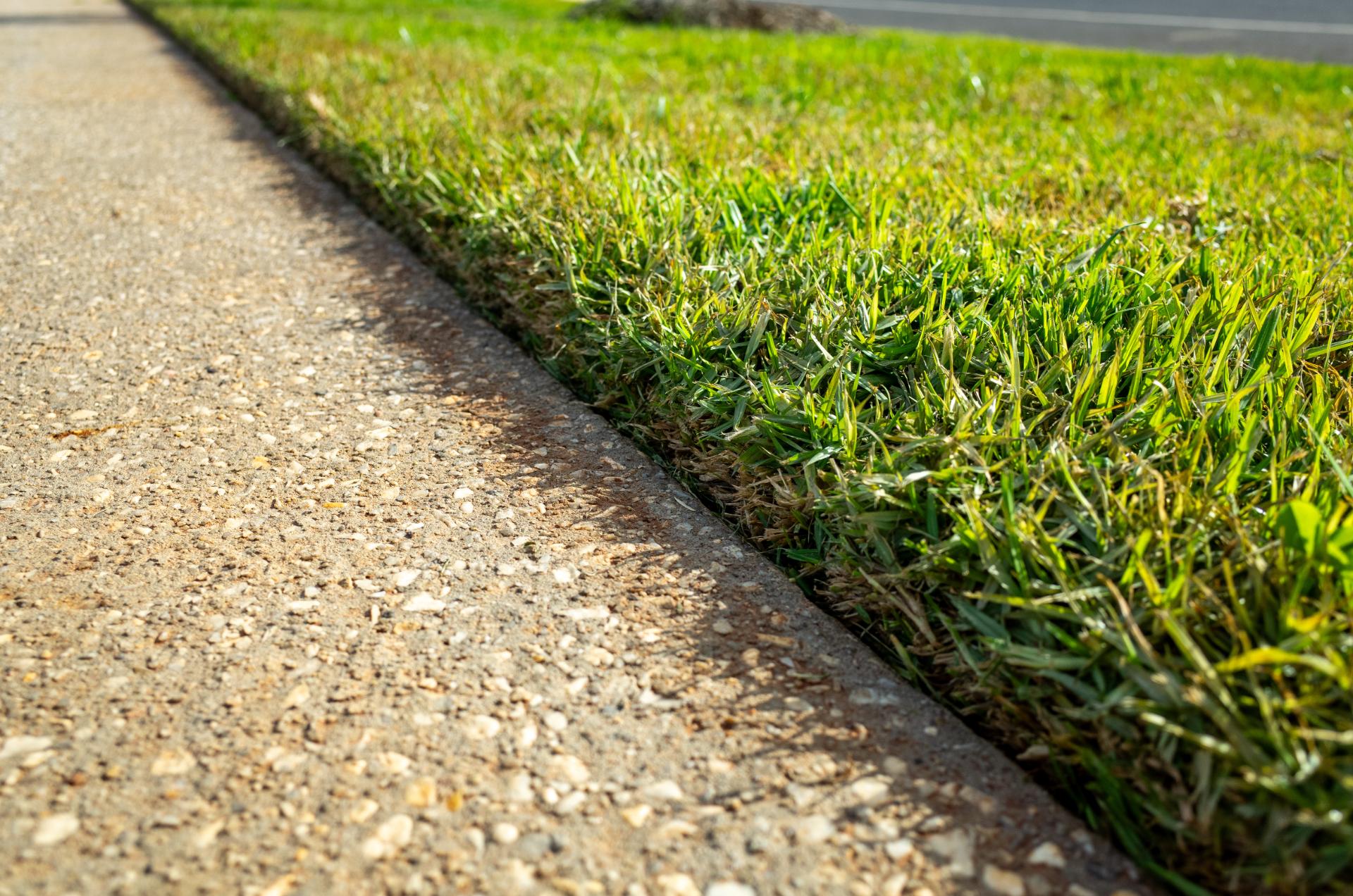
This is the headliner, and it's the one people don't realize is weather-dependent. Cutting a fresh edge in dry, hard soil is genuinely miserable — the spade bounces, the soil crumbles, and you end up with a ragged line. In moist soil, the blade slides through and the edge holds its shape.
How to do it well:
- Use a half-moon edger or a sharp flat spade for beds and tree rings. A string trimmer turned vertical works for walkways but won't give you the clean trench that makes a bed look finished.
- Cut down, not at an angle — you want a vertical wall about 2 to 3 inches deep on the lawn side.
- Lay out curves with a garden hose first. Drop the hose where you want the line, step back and look at it from the house, adjust, then cut along it. Freehanding a curve almost always produces a wobble you'll see forever.
- Pull the cut sod and soil back toward the bed, then top with mulch. The trench itself is what stops grass from creeping in.
A crisp edge does more for how a lawn reads than almost anything else you can do in an afternoon. Same grass, completely different impression.
2. Core aerate
If aeration was on your list this season, a damp day is the day. Aerator tines need soil with some give — in dry ground they skate along the surface or pull short, broken plugs. Moist soil gives you deep, intact cores, which is the entire point.
- Mark sprinkler heads, shallow cables, and irrigation lines first. This is the step people skip and regret.
- Leave the plugs on the lawn. They break down in a couple of weeks and return soil and microbes to the surface.
- Aeration pairs well with overseeding and a light feeding, so if you're in the right season for that, stack them.
Timing note: aerate cool-season lawns in early fall, warm-season lawns in late spring to early summer. Damp soil makes the job easier, but it doesn't override the calendar.
3. Pull weeds by hand
Dandelions, plantain, thistle — anything with a taproot — come out whole in soft soil. In dry ground the root snaps off an inch down and the weed simply regrows.
Grip low, right at the crown, and pull slowly and straight up. If you feel it start to break, rock it side to side and try again rather than yanking. A weeding fork or fishtail weeder pays for itself on a day like this.
Bonus: this is chemical-free control, and you're catching the plants before they set seed.
4. Do the mower maintenance you keep postponing
You're not using the mower today anyway, so:
- Sharpen the blade. A dull blade shreds grass tips rather than cutting them, which leaves ragged wounds that brown out and invite disease. If your blade tips look frayed and tan a few days after mowing, that's your answer. Sharpen a few times a season.
- Scrape the deck. Caked-on clippings hurt airflow, which hurts cut quality and how evenly clippings disperse.
- Check tire pressure. Uneven pressure means an uneven cut height side to side — a surprisingly common cause of "why does my lawn look striped weird."
- Air filter, oil, spark plug. Ten minutes now, no mid-season breakdown later.
5. Calibrate your spreader
Rain day, garage floor, calibration. Most burn and most wasted fertilizer traces back to not knowing what your spreader actually puts down at a given setting. Run a known amount over a measured area on the driveway, sweep it up, weigh it, adjust.
This one pairs directly with knowing your real square footage — if you're guessing at both your lawn size and your spreader rate, you're guessing twice. You can map your lawn for free at LawnMaps.com to get exact square footage for each zone, which turns spreader calibration from a shrug into actual math.
6. Pull a soil test
Damp soil is easy to sample. Take several small cores from different areas, mix them in a clean bucket, and send the composite to your county extension office. It's cheap, and it's the difference between fertilizing based on evidence and fertilizing based on the bag that was on sale.
7. Walk the lawn and take notes
Sounds soft, but it's the most useful twenty minutes on this list. Wet mornings show you things dry afternoons hide: where water pools, where drainage is poor, which low spots stay soggy for hours, where moss is creeping in. Take photos. Those spots are your fall project list, and you won't remember them in August.
What not to do on a wet day
Just as important:
- Don't apply granular fertilizer to wet blades. Granules stick to damp grass instead of falling to the soil, which concentrates salt right on the leaf and burns it. Fertilize dry grass, then water it in. (Our fertilizer burn guide covers what that damage looks like.)
- Don't fertilize ahead of heavy rain. You'll wash product off-site — into the storm drain, not into your roots. That's wasted money and a real water-quality problem.
- Don't spray herbicide onto wet foliage or right before rain. Most products need dry leaves to stick and a rainfast window of several hours to work. Check the label; spraying into a wet forecast usually means spraying twice.
- Don't run heavy equipment across saturated turf. Ruts and compaction last far longer than the delay would have.
- And don't mow. Wet grass clumps, tears rather than cuts, mats the lawn under the clumps, and carries fungal spores across the yard on your tires.
When you can mow again
Wait for the blades to dry, not just for the rain to stop. In practice that's usually a few hours of sun and a little breeze, or often the following afternoon after an overnight rain.
Then two adjustments for that first cut back:
- Raise the deck a notch. Grass grows fast after rain, and the one-third rule still applies — never take more than a third of the blade height in one pass. If it got away from you, cut high now and step it down over two or three mowings rather than scalping it in one.
- Slow down. A thick, damp-ish cut needs more time under the blade to cut cleanly. Ground speed and cut quality are directly linked.
The takeaway
A rained-out mowing day isn't a lost day — it's the right day for the jobs that need soft ground. Edge your beds and tree rings while the spade actually cuts. Aerate if you're in season. Pull taproot weeds while they'll come out whole. Sharpen the blade, calibrate the spreader, pull a soil test, and walk the property taking notes on where the water sits. Just check for soggy versus moist first, keep fertilizer and herbicide in the garage until things dry out, and let the grass dry before you cut.
You'll get more out of the afternoon than mowing would have given you anyway — and next dry weekend, the mower's sharp and the edges are already crisp.
Knowing your exact square footage and zone layout makes half this list easier — spreader calibration, product amounts, even planning which beds to edge first. Map your lawn for free at LawnMaps.com, and while you're in there, check your soil temperature to see whether you're actually in the window for aeration and seeding or just doing cleanup.