Pre-Emergent Herbicide: The Secret Weapon Against Weeds (And When to Use It)
If you wait until you can see the weeds, you've already lost the battle. Pre-emergent herbicide works by stopping weed seeds — like crabgrass — from ever germinating in the first place. But it only works if you apply it at the right soil temperature, water it in properly, and follow a split application schedule. Here's everything you need to know to get it right this season.
Pre-Emergent Herbicide: The Secret Weapon Against Weeds (And When to Use It)
Published on LawnMaps.com | Estimated read time: 5 minutes
By the time you see crabgrass and other weeds popping up in your lawn, it's already too late to stop them. That's not a fun reality — but there's a way around it.
Pre-emergent herbicide works before weeds ever show their face. Applied at the right time, it creates a barrier in the soil that stops weed seeds from germinating in the first place. No sprouts, no problem. It's one of the most effective things you can do for your lawn all year — and most homeowners either skip it or apply it at the wrong time and wonder why it didn't work.
Let's break down exactly what pre-emergent is, why it's worth doing, and how to apply it the right way.
What Is Pre-Emergent Herbicide?
Pre-emergent herbicide is a product you apply to your lawn to prevent weed seeds from germinating — that means sprouting and growing into a plant. It doesn't kill existing weeds, and it doesn't affect your established grass. It specifically targets seeds in the soil before they get the chance to emerge.
The most common target is crabgrass — a coarse, fast-spreading annual weed that can take over a lawn quickly in summer. But pre-emergents also help suppress other common lawn weeds like goosegrass, foxtail, and spurge.
Think of it as putting up a fence before the problem starts, rather than chasing weeds around with a spot-treatment all summer.
The Benefits of Pre-Emergent
Getting your pre-emergent down at the right time pays off in a big way throughout the season. Here's what you're actually getting:
Fewer weeds all summer long. Crabgrass and other annual weeds germinate in spring and spread aggressively through summer. Stopping them at germination means a cleaner, thicker-looking lawn from June through September.
Less work later. Post-emergent weed killers (products that kill weeds after they've sprouted) are more expensive, require more applications, and don't always work on mature weeds. Pre-emergent is the easier, cheaper path.
Your grass wins the competition. Weeds compete with your grass for water, nutrients, and space. Fewer weeds means your lawn gets more of everything it needs to thrive.
Cost-effective. One or two pre-emergent applications in spring can save you from buying multiple weed control products all season long.
Timing Is Everything — and Soil Temperature Is Your Guide
This is where most people go wrong. They apply pre-emergent based on the date — "I always do it the first week of April" — and sometimes it works, sometimes it doesn't. The reason is that weed seeds respond to soil temperature, not the calendar.
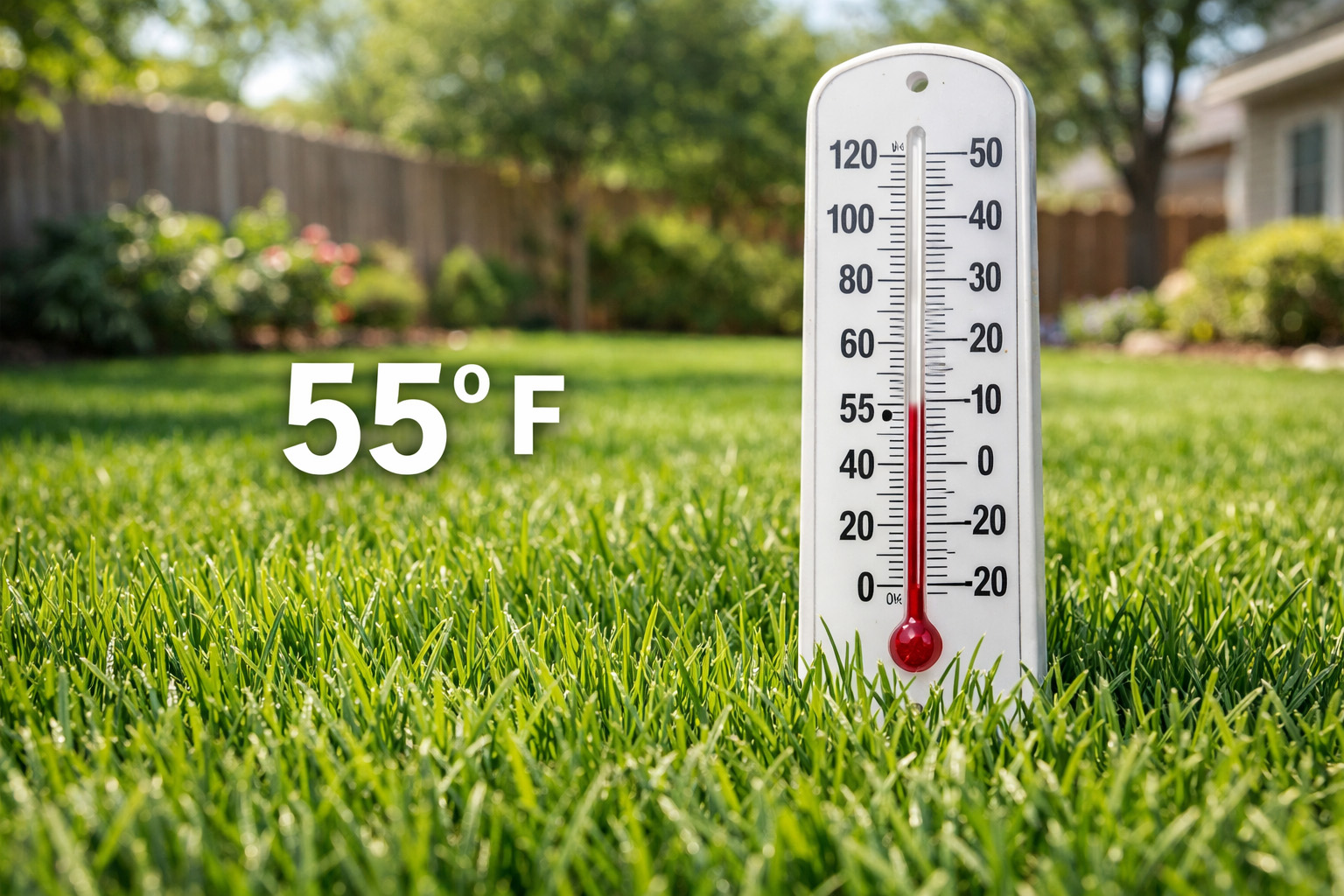
Crabgrass starts germinating when soil temperatures reach 50–55°F at a 2-inch depth. Your pre-emergent needs to be down and activated before that happens. Apply it too early when the ground is still cold and it may break down before weed seeds even stir. Apply it too late and the seeds are already germinating and the window is closed.
The sweet spot is applying when soil temps are consistently in the 45–50°F range and trending upward.
Here's the easiest way to know where you stand: LawnMaps.com shows soil temperature data right in your dashboard, updated for your specific location. Instead of guessing or checking a regional map that may not reflect your yard, you can log in and see exactly what your soil is doing — so you know when it's time to act.
The Split Application Method: Why Two Rounds Beat One
Here's a pro tip that makes a real difference: instead of putting down all your pre-emergent at once, split it into two applications.
Here's how it works:
- First application — Apply half your pre-emergent at the right soil temperature window (around 45–50°F, before crabgrass germinates)
- Wait 2–3 weeks
- Second application — Apply the remaining half to reinforce the barrier
Why does this work better?
Pre-emergent doesn't last forever. Depending on the product, rainfall, and soil conditions, a single application can start to break down after 6–8 weeks. A split program extends your window of protection through the peak germination period, which in many parts of the country stretches from early spring well into late spring.
Think of it like reapplying sunscreen on a long day outdoors. One application in the morning isn't going to carry you through the whole day. Two applications give you more consistent coverage.
It also gives you a buffer if your timing on the first round is slightly off — the second application helps fill any gaps.
How much product per application?
Since you're splitting the total amount, each application gets half the recommended label rate. Always read the product label — it will tell you the full season rate, and you simply divide that evenly across your two applications.
You Have to Water It In
This part is non-negotiable, and it trips up a lot of first-timers.
After applying a granular pre-emergent, you need to water it in — typically about ¼ to ½ inch of water — within 24–48 hours of application. This activates the herbicide and moves it into the soil where weed seeds actually live.
If you skip this step (or if it doesn't rain soon after application), the granules just sit on top of the lawn and don't form the protective barrier they're supposed to. All that product, and none of the benefit.
A few watering notes:
- A good rain after application counts — you don't have to run your sprinklers if the forecast shows rain within a day or two
- Don't water so heavily that product runs off your lawn onto pavement or into storm drains
- After watering in, try to avoid heavy traffic on the lawn for a day or two to keep the barrier intact
A Few Things Pre-Emergent Won't Do
It's worth being upfront here:
- It won't kill existing weeds. If you've already got weeds growing, pre-emergent won't touch them. You'll need a post-emergent product for that.
- It will interfere with grass seeding. Pre-emergent doesn't know the difference between a weed seed and a grass seed. If you're planning to overseed your lawn, either do it in the fall instead, or wait at least 8–12 weeks after your pre-emergent application before seeding (check your specific product label for guidance).
- It's not a one-and-done for all weeds. Pre-emergent targets annual weeds like crabgrass. Perennial weeds (dandelions, for example) spread by root, not seed, so they need a different approach.
Your Pre-Emergent Game Plan
Here's your simple action plan to get this right:
- Check your soil temperature — Log into your LawnMaps dashboard to see current soil temps for your location. You're looking for temps approaching 50°F and rising.
- Apply your first round — Use half the label rate when soil temps are in the 45–50°F range.
- Water it in — Apply ¼ to ½ inch of water within 24–48 hours (or let a good rain do it for you).
- Wait 2–3 weeks
- Apply your second round — The remaining half rate to lock in your protection through the peak germination window.
- Water in again — Same as the first application.
Do that, and you'll be in great shape heading into summer.
Your Next Step
The biggest factor in pre-emergent success is timing — and timing comes down to soil temperature. Check your soil temp anytime in your LawnMaps.com dashboard so you're not guessing when your window opens. You can also map your lawn by zone so you know exactly how much product to buy and apply for each area — no over-purchasing, no under-applying.
A little prep now means a lot fewer weeds pulling your attention away from your lawn all summer long.