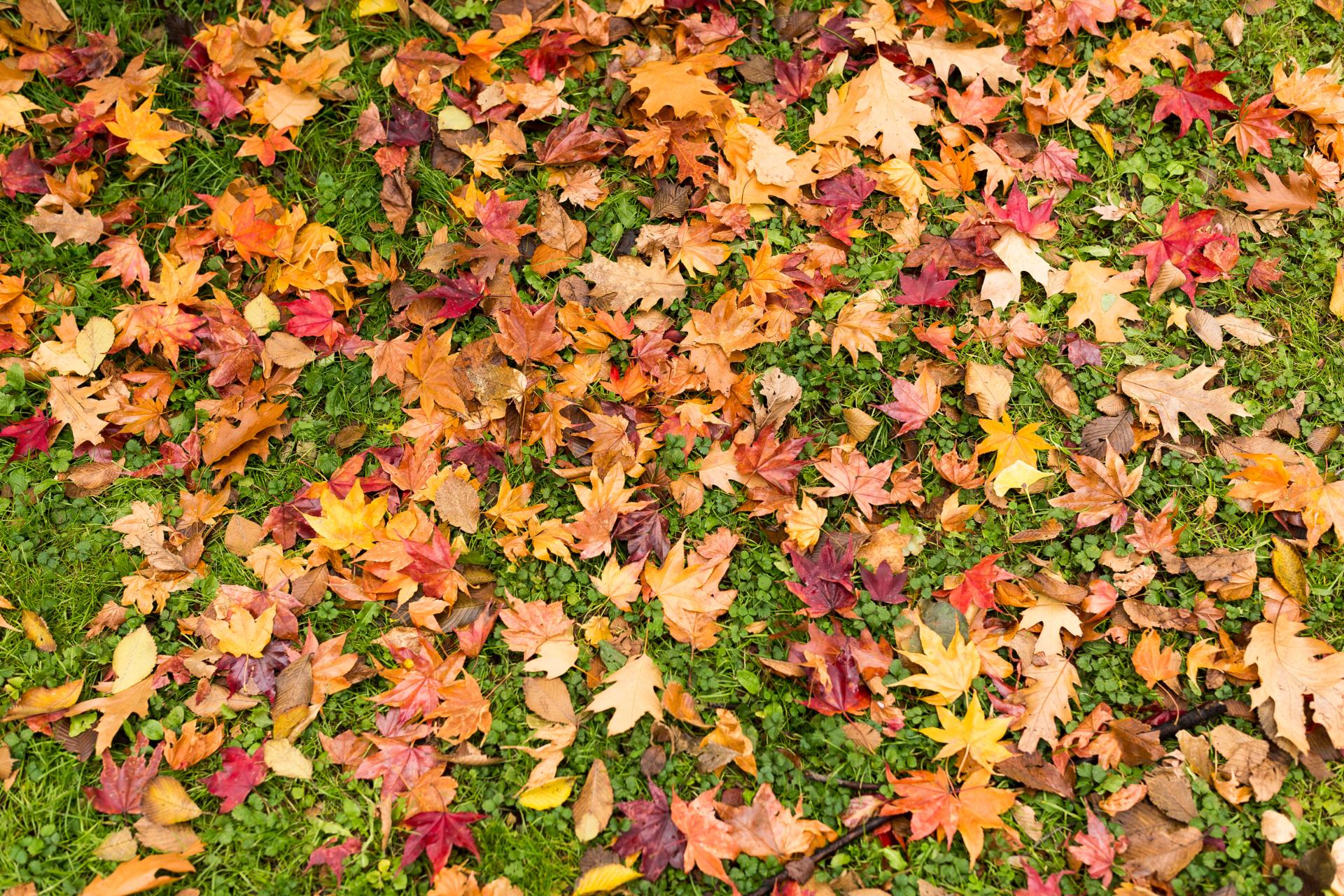
Leaf Cleanup: Should You Mulch Them, Bag Them, or Leave Them Alone?
Still have leaves coming down? Here's how to decide between mulching, bagging, or leaving them alone, with a simple "can you see the grass?" test and tips for what to do with the extras.
Leaf Cleanup: Should You Mulch Them, Bag Them, or Leave Them Alone?
You've mowed the leaves once. Maybe twice. Maybe a few times. And you look up and the trees still aren't done.
If that's you, you're not behind. Leaves don't fall on a schedule, and most lawns need several passes before the last one hits the ground. The real question is what to do with them: run the mower over them, rake and bag them, or ignore them until spring?
The honest answer is that most lawns do best with a mix. Let's walk through when each option works, so you can stop second-guessing and finish the job.
Why leaves matter for your lawn at all
A few leaves on grass are no problem. A thick, soggy blanket of them is.
When leaves pile up, they block the sunlight your grass still needs in late fall. They also trap moisture against the blades. That combination can smother the grass underneath and invite disease, including snow mold, a fungus that shows up as matted, crusty gray or pink circles when the snow melts. (We covered it in our fall lawn care checklist.)
But leaves are also free organic matter. Chopped up small, they break down over winter and feed the soil. So the goal isn't a spotless lawn. The goal is the right amount of leaf on the grass.
Option 1: Mulch them with your mower (best for most yards)
Mulching just means chopping the leaves into small pieces with your mower so they fall down between the grass blades and break down there. It's less work than raking, and nothing leaves your yard.
Extension research backs it up. Michigan State University has studied this for years and found that maple and oak leaves can be mulched into an established lawn without hurting its color or quality. In some of their trials, it also reduced dandelion numbers the following spring. (More on dandelions in our dandelion guide.)
How to do it well:
- Mow at around 2.5 to 3 inches. That's a good height for chopping leaves finely, and it matches where you want your last mows of the year anyway.
- Mow when the leaves are dry or just slightly damp. Dry leaves chop up nicely. Soaked leaves clump and clog the deck and don't shred into small pieces. If the ground is squishy, our too-wet-to-mow guide covers what to do instead.
- Go slow. Slower ground speed gives the blade more time to chop. (Our mower speed article explains why.)
- Make a second pass if needed. If you can still see big leaf pieces afterward, mow the same area again, ideally at a right angle to the first pass.
- Mow often. Don't wait until the whole tree has dropped. Mowing every week or so keeps the leaf layer thin, so each pass has less to chop.
A sharp blade helps a lot here. A dull one tears leaves into ragged pieces instead of cutting them cleanly.
The "can you see the grass?" test
You don't need a ruler to know how many leaves are too many. Just look at the lawn.
After you mulch, you should still see plenty of grass poking through. University of Minnesota Extension suggests mulching until roughly half the lawn surface is still visible. Colorado State Extension gives similar advice: if green turf is still showing, you're fine.
| What you see after mulching | What to do |
|---|---|
| Mostly grass, with small leaf bits tucked in | You're done. Leave it. |
| About half grass, half leaf bits | Borderline. Fine for now, but plan another pass soon. |
| Barely any grass visible, or big pieces still covering it | Too much. Rake or bag the extra. |
Another rule of thumb comes from University of Missouri Extension: a leaf layer much thicker than 3 to 4 inches is probably too much. It also warns against letting a dense, wet, matted layer sit on the lawn for more than a few days.
Option 2: Rake or bag them (when mulching won't cut it)
Mulching is the default, but it's not always the answer. Rake or bag when:
- The layer is too thick. If you can't see the grass after mulching, the extra needs to go.
- The leaves are wet and matted. Wet leaves mat down into a slick layer that a mower can't chop well. Raking them off is easier on you and your mower.
- You have a heavy-drop tree. A big silver maple or oak can dump more leaves than any lawn can absorb. Mulch some, and collect the overflow.
- Pine needles. A few are fine, but a heavy layer can jam a mower deck.
- It's the last cleanup of the year. If a big drop comes late and there's snow in the forecast, getting the excess off before winter is the safest bet against snow mold.
You don't have to bag everything. Many people mulch what they can and collect the rest.
Option 3: Use the leaves somewhere else
Leaves you rake up don't have to become trash. Here are three good places to put them:
- Garden beds. A few inches of shredded leaves over flower beds and around shrubs is free mulch. It holds moisture, blocks weeds, and breaks down into soil by spring.
- A compost pile. Leaves are what composters call "browns," the carbon-rich material that balances out green stuff like grass clippings and kitchen scraps. Mix them in and they'll be finished compost by next year.
- A leaf mold pile. Just pile damp leaves in a corner, or in a simple wire cage, and leave them for a year or two. You get crumbly, dark material that's excellent for soil.
One exception: black walnut leaves. Black walnuts produce a natural compound called juglone that can stunt some plants, especially tomatoes and related vegetables. The roots are the main source, but the leaves have it too. Keep walnut leaves out of vegetable beds and mulch. If you want to compost them, extension guidance says to do it in a hot, well-turned pile and let it finish for six months or more before using it on sensitive plants. When in doubt, bag walnut leaves for yard waste pickup.
So what should you do this week?
Here's a simple plan if you've still got leaves coming down:
- Mulch-mow once a week while leaves are falling, at 2.5 to 3 inches, when the grass and leaves are dry.
- Do the "can you see the grass?" check after each mow.
- Rake or bag the overflow, especially anything wet and matted.
- Do one last pass after the final leaves drop, and clear any piles from the edges of the lawn and from under trees.
- Don't leave a leaf blanket over the winter. A pile sitting under snow is one of the most common causes of dead spots next spring.
Keep it simple. Your lawn doesn't need perfection. It just needs to be able to see some daylight.
Take it to LawnMaps
If you've been guessing how big your lawn is, now's a good time to stop. Map your lawn for free at LawnMaps.com to get your exact square footage, so you can plan your cleanup, and next spring's fertilizer and seed, without guessing. And while you're there, check your soil temperature in your LawnMaps dashboard to see when your grass is winding down for winter, which tells you when your last mow is coming.