Fall Lawn Care Checklist: What to Do in September, October & November
Fall is the most important season for cool-season lawns — it's when grass builds the roots that carry it through winter. Here's your month-by-month checklist for September through November, including what's still worth doing if you're getting a late start.
Fall Lawn Care Checklist: What to Do in September, October & November
Published on LawnMaps.com | Estimated read time: 5 minutes
If you only put real effort into your lawn during one season, make it fall. That surprises a lot of people — spring gets all the attention, with everyone out spreading fertilizer the first warm weekend in April. But for cool-season lawns (the bluegrass, fescue, and ryegrass lawns common across the northern half of the country), fall is when the grass does its most important work: growing roots, filling in thin spots, and storing up energy to get through winter and come back strong.
The work you do between now and the first hard freeze shows up next spring. A lawn that gets a good fall comes out of winter thicker, greener, and better at crowding out weeds on its own.
Here's your month-by-month checklist — including what's still worth doing if you're getting a late start.
First: is this checklist for your grass?
This guide is built for cool-season grasses. If you have a warm-season lawn (Bermuda, Zoysia, St. Augustine, Centipede), your fall is very different — your grass is winding down toward winter dormancy, so you'll mostly be mowing, managing leaves, and not feeding it nitrogen. We'll flag the warm-season differences along the way.
Not sure which you have? Our guide to cool-season vs. warm-season grass walks you through it in about two minutes.
Why fall matters so much
Fall gives cool-season grass the best of both worlds: the soil is still warm from summer, which keeps roots growing, while the air is cool, which takes the stress off the blades. Add more rain, fewer weeds sprouting, and shorter days, and you've got ideal growing conditions.
That's why fall is the best time of year to seed, the most important time to fertilize, and the easiest time to knock out tough weeds. You're working with your grass instead of against the weather.
September: the big jobs
If you already handled these, great. If not, read the notes — some can still be done in early October.
1. Seed or overseed thin areas. Overseeding just means spreading new seed over your existing lawn to thicken it up. Early fall is the single best seeding window of the year for cool-season grass — it's exactly why we tell people not to seed in May. New grass needs roughly 6–8 weeks of growing time before the first hard frost to get established. (For the full step-by-step, see our 4-week fall overseeding timeline and the Seed Day checklist I use on my own lawn.)
Late start? In northern areas, early October is usually the tail end of the window. If you're past it, you have two honest options: wait until spring, or try dormant seeding — spreading seed in late fall once the soil is too cold for it to sprout (more on that in November).
2. Core aerate if your soil is compacted. Core aeration means running a machine that pulls small plugs of soil out of the lawn. Those holes let air, water, and fertilizer reach the roots. It's especially helpful on heavy clay or high-traffic yards. Aerate before you overseed — seed that drops into the holes gets great soil contact. Not every lawn needs it every year, so if your grass is healthy and water soaks in fine, it's okay to skip.
3. Give it the first fall feeding. For cool-season lawns, early fall is one of the two most important fertilizer applications of the year. It helps the grass recover from summer stress and fuels root growth.
4. Check for grubs. Late summer into fall is when grub damage peaks. If brown patches peel up like loose carpet when you tug them, that's the sign — see our grub damage rescue guide for what to do.
October: keep it growing
1. Keep mowing at your normal height. Your grass is still growing, so keep cutting it, and keep following the one-third rule — never remove more than a third of the blade at once. There's no need to drop the height yet. Fall rain can make it tricky to find a dry day — if the ground's soaked, our too-wet-to-mow guide covers what to do instead.
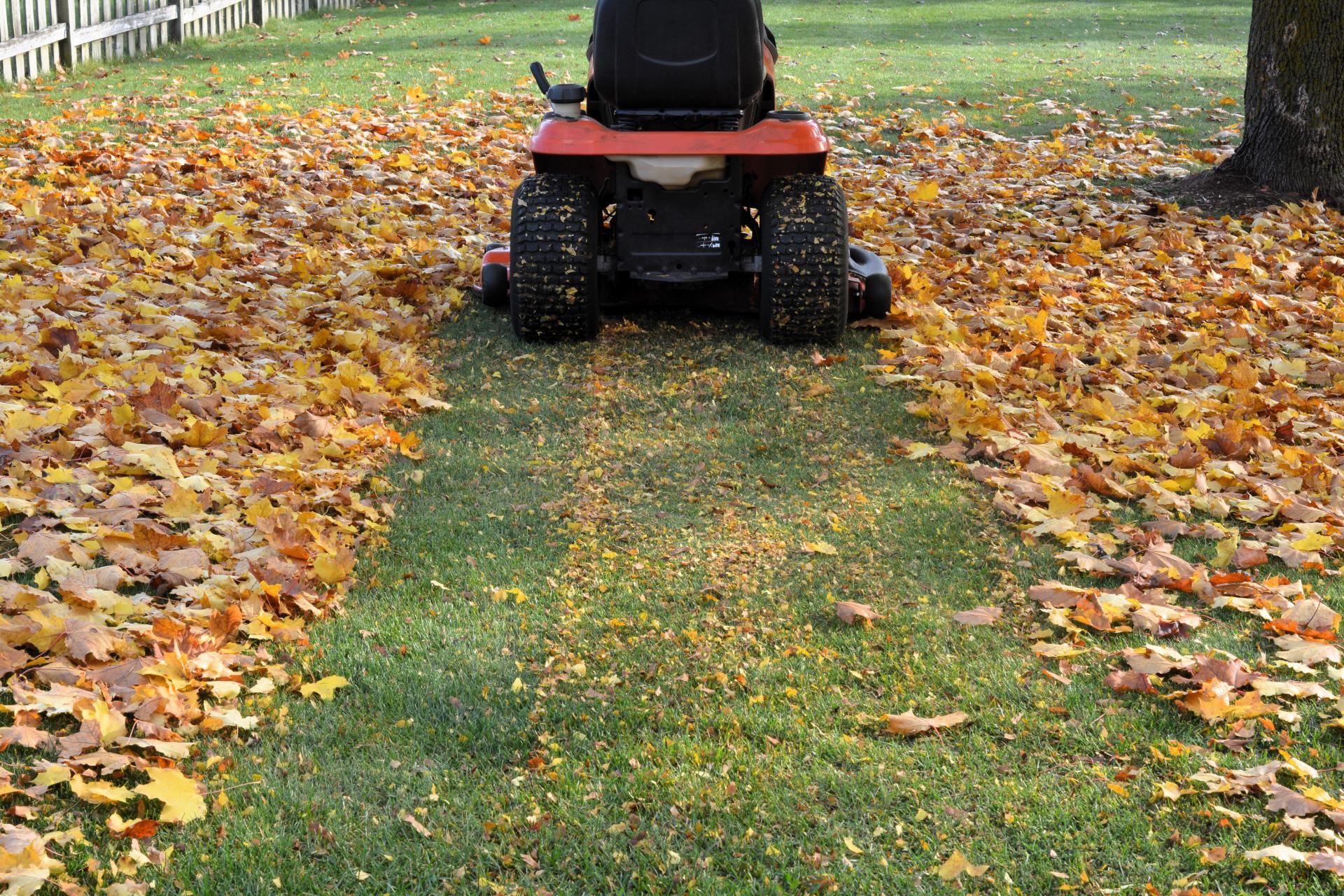
2. Deal with leaves early and often. A thick layer of fallen leaves blocks sunlight and traps moisture, which can smother grass and invite disease. If the layer is light, just mow over it — the mower chops leaves into small bits that break down and feed the soil. If you can't see the grass through the leaves, rake or bag them.
3. Kill broadleaf weeds now. Fall is the best time all year to go after perennial weeds like dandelions, clover, and creeping Charlie. As the weather cools, these weeds pull nutrients down into their roots for winter — and they pull weed killer down with them, so it actually reaches the root. (Our dandelion article covers the options.)
One important exception: if you just seeded, check the weed killer label before spraying. Most need you to wait until new grass has been mowed a few times, or they'll damage the seedlings.
4. Keep watering if it's dry. Fall rain usually does the job, but if you go a week or two without it, your lawn still needs about an inch a week. Newly seeded areas need to stay consistently moist — light, frequent watering until the seedlings are established.
5. Warm-season lawns: stop the nitrogen. If you have warm-season grass, don't fertilize with nitrogen this late. Feeding it now pushes tender new growth right before winter dormancy, and that growth is vulnerable to cold damage.
November: put it to bed
1. Apply the late-fall "winterizer" feeding. This is the cool-season lawn's other key fertilizer application. A "winterizer" is just a fall fertilizer applied late in the season — after top growth slows down, but while the grass is still green. The grass can't use it to grow tall anymore, so it stores the energy in its roots instead. That's what gives you an early, strong green-up next spring.
The timing sweet spot is around your last mowing or two. LawnMaps tracks the soil temperature for your property, so you can see when growth is slowing down instead of guessing from the calendar.
2. Lower the mower for the last cut or two. For your final mows of the year, gradually bring cool-season grass down to around 2.5–3 inches. Long, floppy grass going into winter can mat down under snow and encourage snow mold — a fungus that shows up as matted, crusty gray or pink circles when the snow melts. Lower it gradually, though. Don't scalp it in one go.
3. Clear the last of the leaves. A leaf pile left sitting all winter is one of the most common causes of dead spots in spring.
4. Consider dormant seeding. If you missed the fall seeding window, you can spread seed once the soil is cold enough that it won't sprout — usually late November or later. The seed sits in the soil over winter and germinates on its own in spring. It's not as reliable as early-fall seeding, but it beats starting from scratch in April.
5. Winterize your equipment. Clean the mower deck, sharpen the blade so it's ready for spring, and either run the gas tank dry or add fuel stabilizer. If you have an irrigation system, have it blown out before the first hard freeze so the pipes don't crack.
Your fall checklist at a glance
| Month | Cool-season lawns | Warm-season lawns |
|---|---|---|
| September | Seed/overseed, aerate if compacted, first fall feeding, check for grubs | Light feeding early in month only, keep mowing |
| October | Mow normally, manage leaves, kill broadleaf weeds, water if dry | No more nitrogen, manage leaves, mow until it stops growing |
| November | Winterizer feeding, lower final mows, final leaf cleanup, dormant seed if needed | Let it go dormant, clear leaves, winterize equipment |
The takeaway
If you're starting late, don't worry — you haven't missed fall. Prioritize the jobs that still fit the calendar:
- Keep leaves off the grass all season.
- Spray broadleaf weeds in October while they're pulling energy into their roots.
- Put down a winterizer in November if you have cool-season grass.
- Lower your last couple of mows to head off snow mold.
- Dormant seed thin areas if you missed the early-fall seeding window.
Everything you do now pays off next April, when your lawn wakes up thicker and greener than the neighbors'.
Before you buy a bag of fertilizer or seed, map your lawn for free at LawnMaps.com to get your exact square footage — then you'll know precisely how much product you need, with no leftover bags in the garage and no over-application. And you can check your soil temperature anytime in your LawnMaps dashboard to time your winterizer and seeding right for your yard.