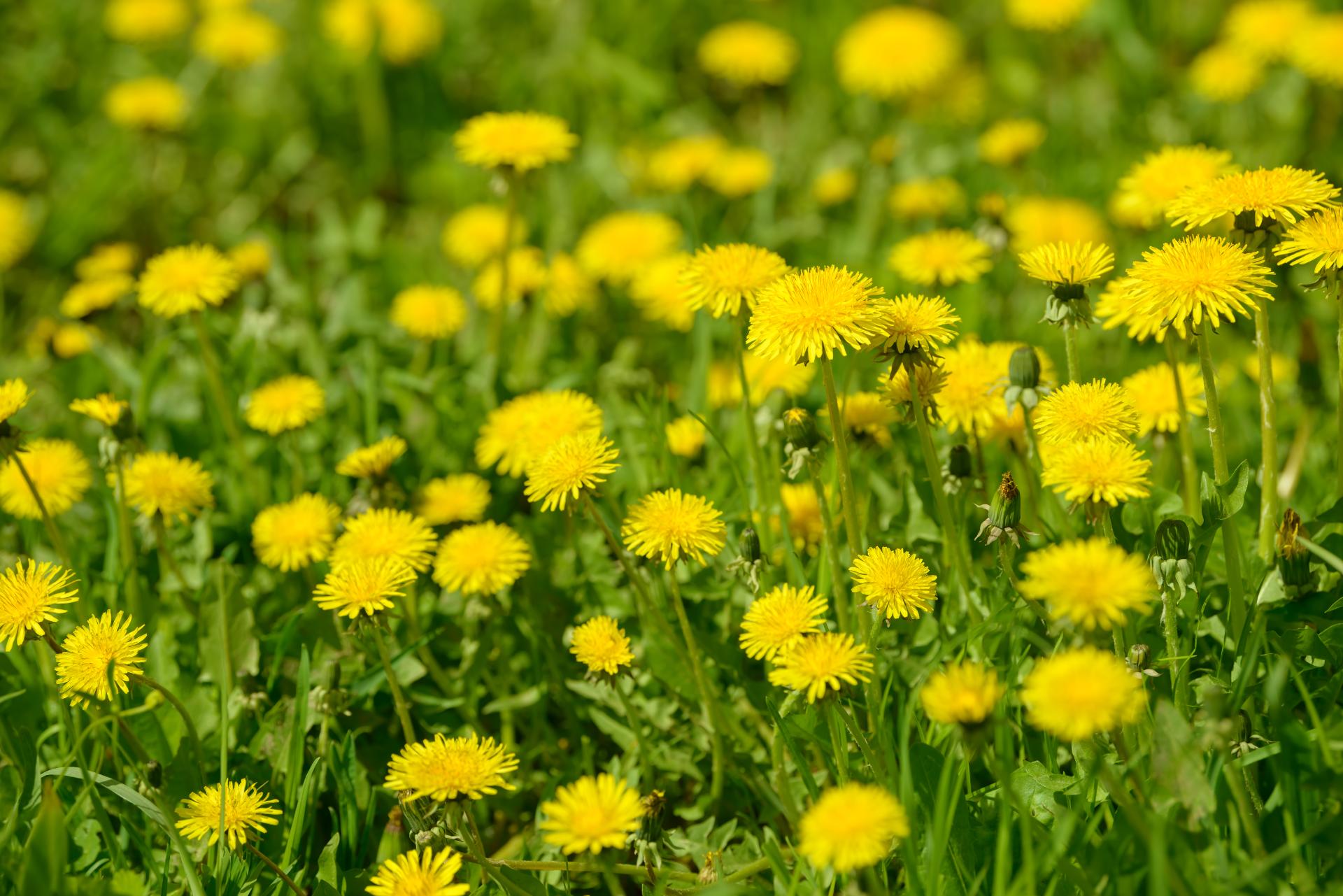
Dandelions: How to Get Rid of Them, Control Them, and What to Do With Them If You Don't
Dandelions are one of the toughest weeds a homeowner faces — deep taproots, prolific seeding, and zero respect for pre-emergent herbicide. But with the right combination of 2,4-D treatments and manual removal tools like the Garden Weasel, you can get them under control. And if you're pulling them anyway, you might as well know that dandelion leaves, roots, and flowers are surprisingly useful — from herbal tea to salads to homemade syrup.
Dandelions: How to Get Rid of Them, Control Them, and What to Do With Them If You Don't
Published on LawnMaps.com | Estimated read time: 6 minutes
There's something almost impressive about a dandelion. You pull it out, and a week later it's back. You spray it, and its cousins pop up three feet away. You ignore it, and suddenly your whole lawn looks like a yellow polka-dot blanket.
Dandelions are one of the most stubborn, persistent weeds a homeowner deals with — and also one of the most misunderstood. Most people don't realize that the same weed they're fighting in their lawn is also edible, medicinal, and genuinely useful if you know what to do with it.
So let's cover both sides: how to control and eliminate dandelions the right way, and what to do with them if you pull them out and don't want to waste them.
Why Dandelions Are So Hard to Get Rid Of
Before we talk solutions, it helps to understand why dandelions are such a tough opponent.
Unlike crabgrass (an annual weed that dies off each winter and regrows from seed), dandelions are perennial weeds — meaning they come back year after year from the same root system. That long, thick taproot can extend 6–18 inches into the soil. If you pull the plant but leave even a small piece of the taproot behind, it will regrow.
They also spread by seed — those fluffy white seed heads you see in late spring send hundreds of seeds floating across your yard (and your neighbors' yards) every season.
This combination of deep roots and prolific seeding is why dandelions require a real strategy, not just a quick spray or pull. And it's also why pre-emergent herbicide won't help — pre-emergents stop seeds from germinating, but they don't affect established perennial roots. Dandelions laugh at pre-emergent.
Method 1: Chemical Control With 2,4-D
2,4-D is a broadleaf herbicide — meaning it targets plants with broad, flat leaves (like dandelions) while leaving narrow-bladed grasses unharmed. It's one of the most widely used and effective weed control ingredients in lawn care products and is found in many common brands you'll find at any hardware or garden store. Look for it on the active ingredients label.
How it works
2,4-D is absorbed through the leaves of the weed and disrupts its growth, essentially causing it to grow itself to death. It works on the whole plant including the root system, which is why it's more effective than just pulling the top off.
When to apply
The best times to apply 2,4-D are spring and fall when dandelions are actively growing and the herbicide can be absorbed most effectively. Avoid applying in extreme heat (above 85°F) or when rain is expected within 24 hours.
A few important tips:
- Apply on a calm day — wind can carry the spray to flower beds or garden plants, which it will also damage
- Don't mow for 2–3 days before or after applying so the weed has enough leaf surface to absorb the product
- You may need 2–3 treatments over the course of a season for heavy infestations — don't expect one application to do it all
- Always read and follow the label instructions for your specific product
Be patient
2,4-D doesn't work overnight. You'll typically see the dandelion starting to curl and wither within a few days to a week. Full kill down to the root can take 2–3 weeks. If it comes back, treat it again.
Method 2: Manual Removal — The Garden Weasel and Dandelion Pullers
If you prefer to go chemical-free, or if you just have a manageable number of dandelions to deal with, manual removal is a solid option. The key is getting the entire taproot — not just the top of the plant.
The Garden Weasel and Dandelion Pullers
Tools like the Garden Weasel Dandelion Puller and similar stand-up weeding tools are designed specifically for this job. They use a forked or claw-like tip that you drive into the soil around the base of the dandelion and lever out the root. The best ones let you do this without bending over, which your back will thank you for after a long weeding session.
Look for a tool that:
- Drives at least 4–6 inches into the soil to capture the taproot
- Has a lever or foot-press mechanism for leverage
- Allows you to eject the weed without touching it
Tips for manual removal
- Water the lawn first or weed after rain — moist soil makes it much easier to extract the full root
- Try to get at least 4–6 inches of the taproot — the deeper the better
- If the root snaps and you can't get the rest, mark the spot and come back in a week or two to treat the regrowth
- For large infestations, manual removal alone may feel overwhelming — combine it with 2,4-D treatment for the worst areas
Method 3: The Combination Approach (Most Effective)
For a lawn with a significant dandelion problem, the most effective strategy is to combine both methods:
- Spot-spray heavy areas with 2,4-D in early spring when dandelions are young and actively growing
- Manually pull any stragglers that survive or pop up in areas you don't want to spray (near garden beds, for example)
- Overseed thin areas in fall — a thick, healthy lawn is your best long-term defense against dandelions. Weeds struggle to establish in dense turf.
- Repeat as needed — dandelion control is a multi-season effort, not a one-and-done fix
Be honest with yourself: if your lawn has a lot of dandelions, it may take a full season or two of consistent treatment to get them fully under control. That's normal. Stay the course and it gets easier every year.
Don't Want to Waste Them? Here's What You Can Do With Dandelions
Here's where things get interesting. Dandelions aren't just weeds — they're actually one of the most nutritious and useful plants in your yard. If you're pulling them anyway, why not put them to use?
🌿 Dandelion Tea
Dandelion tea is one of the easiest and most popular ways to use what you pull from your lawn. Both the leaves and the roots can be used, and they have slightly different flavors and benefits.
Dandelion Leaf Tea
Fresh or dried dandelion leaves make a light, slightly bitter herbal tea — similar to green tea in body. It's naturally rich in vitamins A, C, and K.
How to make it:
- Rinse fresh dandelion leaves thoroughly
- Steep 1–2 tablespoons of fresh leaves (or 1 teaspoon dried) in 8 oz of hot water for 5–10 minutes
- Strain, add honey or lemon to taste, and enjoy
Dandelion Root Tea
Roasted dandelion root tea has a deeper, earthier flavor that many people compare to a mild coffee substitute. It's caffeine-free and has long been used as a digestive aid.
How to make it:
- Wash and chop the roots into small pieces
- Roast in the oven at 300°F for about 30–40 minutes until they turn dark brown and fragrant
- Steep 1 tablespoon of roasted root pieces in 8 oz of boiling water for 10 minutes
- Strain and serve — add a splash of oat milk or honey if you like
🥗 Dandelion Greens in Salads
Young dandelion leaves (harvested before the plant flowers) are actually delicious in salads. They have a pleasantly bitter bite similar to arugula and pair well with sweeter ingredients.
Simple dandelion green salad:
- Handful of young dandelion leaves, rinsed well
- Sliced strawberries or mandarin oranges
- Crumbled goat cheese or feta
- Candied walnuts or pecans
- Light balsamic vinaigrette
The younger and smaller the leaves, the more tender and mild they'll be. Once the plant has flowered, the leaves become much more bitter — still edible, but better cooked than raw.
🌼 Dandelion Flower Uses
Don't overlook the flowers either. Dandelion flowers can be used to make:
- Dandelion honey — simmer flowers with water, lemon, and sugar to make a golden syrup that tastes remarkably like honey
- Dandelion fritters — dip whole flowers in a light batter and pan fry for a surprisingly tasty snack
- Infused oils — soak flowers in olive or coconut oil for several weeks to make a soothing skin oil
⚠️ One Important Note on Harvesting
Only harvest dandelions from areas of your lawn that have not been treated with herbicide or pesticide. Wait at least several weeks — ideally a full season — after any chemical application before consuming anything from that area. When in doubt, don't eat it.
Also rinse everything thoroughly before use — these are plants that have been growing in the soil, after all.
The Bottom Line on Dandelions
Dandelions are persistent, but they're manageable with the right approach. A combination of 2,4-D spot treatments, manual removal with the right tool, and overseeding thin areas will get your lawn heading in the right direction over the course of a season or two.
And if you're going to pull them anyway — you might as well make some tea. 🌼
Your Next Step
Since dandelions are a perennial weed and not seed-driven, pre-emergent herbicide won't help here — but staying on top of your overall lawn health will. A thick, well-fed lawn is your best defense against weeds of all kinds.
Check your soil temperature in your LawnMaps.com dashboard to make sure your fertilizer and weed control timing is dialed in this spring. And use your lawn zone map to calculate exactly how much 2,4-D product you need for each section of your yard — so you're treating effectively without overdoing it.
A little strategy goes a long way with dandelions. You've got this. 🌱