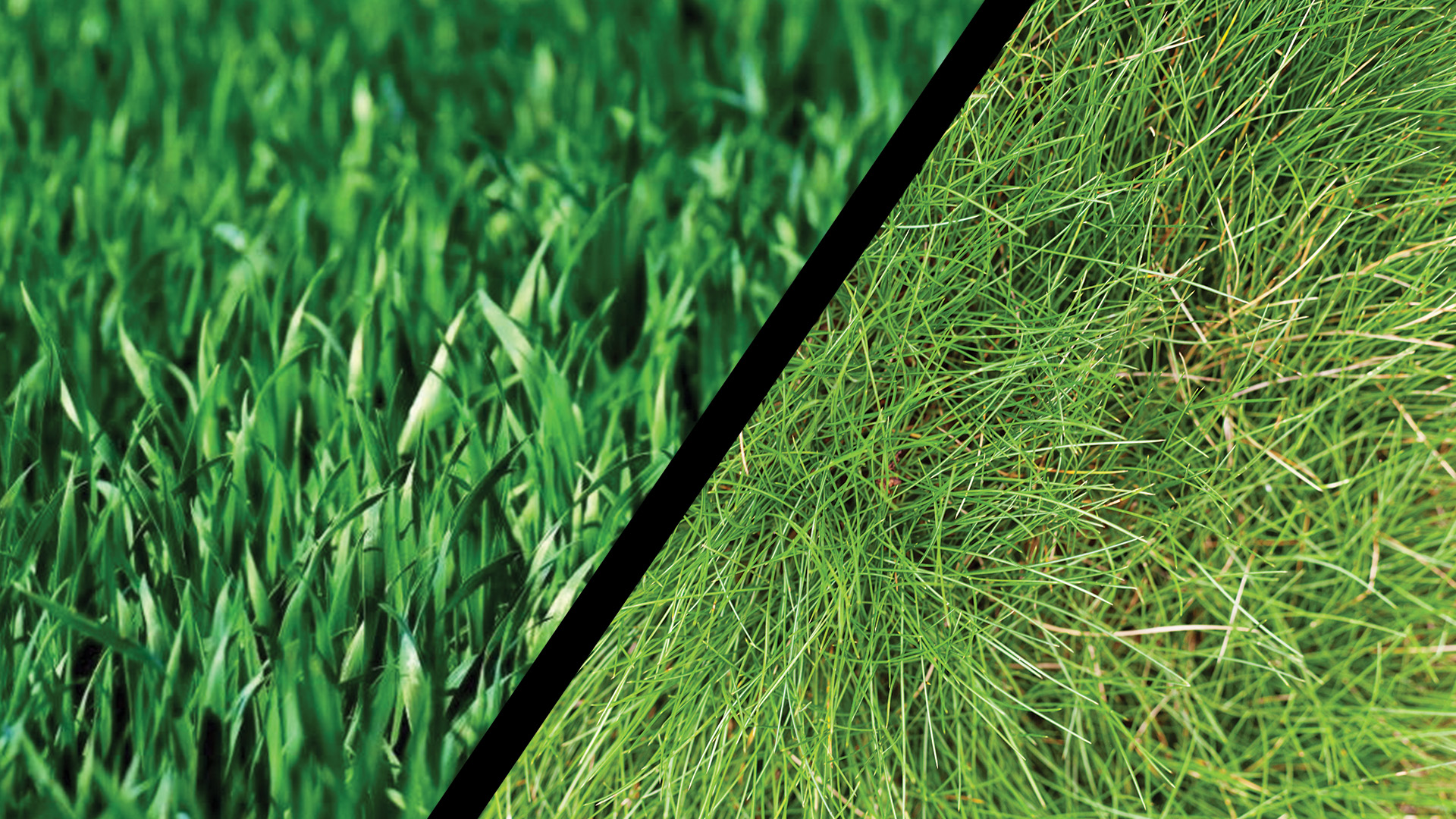
Cool-Season vs. Warm-Season Grass: Which Do You Have?
Cool-season or warm-season? It's the single question that decides when you fertilize, when you seed, and when your lawn should look its best. Here's how to tell which grass you have in about two minutes — using where you live and one dead-simple seasonal test.
Cool-Season vs. Warm-Season Grass: Which Do You Have?
Published on LawnMaps.com | Estimated read time: 5 minutes
Here's a question that quietly decides almost everything about your lawn care: is your grass a cool-season type or a warm-season type? It sounds like trivia, but the answer sets when you fertilize, when you seed, how short you mow, and even when your lawn is supposed to look its best. Do the right thing at the wrong time — like feeding a grass that's dormant — and you're wasting money and effort at best, damaging the lawn at worst.
The good news: figuring out which one you have is easier than it sounds, and you usually only need to do it once. Let's sort it out.
The one big difference
Grasses are split into two families based on the temperature they love:
Cool-season grasses do their growing in the cooler shoulders of the year — spring and fall. They green up early, look fantastic in October, and struggle in summer heat, often going tan and semi-dormant during a hot, dry August. Think of the classic northern lawn.
Warm-season grasses are the opposite. They love heat, hitting their stride in the peak of summer when cool-season lawns are gasping. Their catch is winter: after the first hard frost they go completely dormant and turn brown or straw-colored until spring warms back up. That winter brown is normal and healthy, not dead — it just surprises people.
So the quickest gut-check is this: when does your lawn look its worst? A lawn that browns out in summer heat is almost certainly cool-season. A lawn that browns out over winter and greens up in late spring is warm-season.
It mostly comes down to where you live
Geography is your biggest clue, because these grasses are planted by climate:
| Region | Typical grass family | Common types |
|---|---|---|
| Northern U.S. (Upper Midwest, Northeast, Pacific Northwest) | Cool-season | Kentucky bluegrass, tall fescue, perennial ryegrass |
| Southern U.S. (Southeast, Gulf Coast, Deep South, hot parts of the Southwest) | Warm-season | Bermuda, Zoysia, St. Augustine, Centipede, Bahia |
| Transition zone (the middle band — think Tennessee, Kansas, Virginia, Oklahoma) | Either — and this is the tricky part | Tall fescue and Bermuda/Zoysia both grow here |
That middle band is called the transition zone, and it's exactly what it sounds like: too hot for cool-season grasses to be fully comfortable, too cold for warm-season grasses to be fully happy. If you live there, you genuinely could have either, which is why the identification steps below matter more for you than for anyone else.
How to identify what you actually have
If geography didn't fully settle it, here's how to narrow it down in your own yard.
1. Watch the seasonal behavior. This is the most reliable tell. Note when your lawn is greenest and when it browns:
- Green and thriving in spring and fall, stressed in mid-summer → cool-season
- Green and thriving in the heat of summer, brown all winter → warm-season
2. Look at how it spreads. Get down and look at how the grass grows:
- Bunch-type grasses grow in clumps and spread slowly, mostly getting thicker rather than creeping outward (tall fescue, perennial ryegrass). These are cool-season.
- Spreading grasses send out horizontal runners — above ground (called stolons) or below (rhizomes) — and creep aggressively across bare spots. Bermuda, Zoysia, and St. Augustine all do this, and they're warm-season. (Kentucky bluegrass is the one cool-season grass that also spreads by rhizomes, so use this clue alongside the others.)
3. Check the blade and texture. Warm-season grasses like Zoysia and Bermuda tend to have finer, denser, sometimes stiff blades and form a tight carpet. Tall fescue has noticeably wider, coarser blades. St. Augustine has very broad, flat blades and runs coarse. It takes a little practice, but texture is a good confirming clue.
The cool-season grasses you'll hear about
If you're up north, these are your players — and these exact names show up constantly in searches, so here's the plain-English version:
- Kentucky bluegrass (often written "KBG") — the lush, dark-green, fine-textured classic. Spreads and self-repairs, but needs more water and babying.
- Turf-type tall fescue (you'll see it as "TTTF") — "turf-type" just means the modern, finer-bladed lawn versions of tall fescue, bred to look nicer than the old pasture stuff. It's tough, drought-tolerant, and beginner-friendly.
- Perennial ryegrass — germinates fast, which is why it's often in seed mixes to get green quickly.
You'll also see people ask about "TTTF vs KBG" or "KBG/TTTF mixes." They're both cool-season, and blending them is popular precisely because they cover each other's weaknesses — the tall fescue brings toughness and drought tolerance, the bluegrass brings the ability to spread and fill in damage. A mix gives you a bit of both.
The warm-season grasses you'll hear about
Down south, these dominate:
- Bermuda — heat- and drought-loving, aggressive spreader, loves full sun. The go-to across much of the South.
- Zoysia — dense, slow-growing, tolerates a little more shade; forms a beautiful tight carpet.
- St. Augustine — broad-bladed, handles heat and humidity and coastal conditions, common in the Gulf states and Florida.
- Centipede and Bahia — low-maintenance southern options, common where you want less fuss.
Why getting this right actually matters
Once you know your family, the whole calendar clicks into place, because the two types are on opposite schedules:
- Cool-season lawns are best seeded and fed in early fall, when the soil is still warm enough to sprout seed but the air has cooled. (This is exactly why we tell people not to seed in late spring — the young grass never survives the summer.)
- Warm-season lawns are best seeded and fed in late spring into early summer, once the soil has fully warmed and the grass is actively growing.
Fertilize either one while it's dormant and you're feeding a plant that can't use it. That's where timing tools earn their keep: LawnMaps tracks the soil temperature for your specific property, so instead of guessing, you can see exactly when your seeding and feeding window opens for your grass type. Check your dashboard before you buy a bag of anything.
The takeaway
Start with geography: north usually means cool-season, south usually means warm-season, and the transition zone in the middle could be either. Then confirm with the dead-simple test — a lawn that browns in summer heat is cool-season, and one that browns over winter is warm-season. Back it up by checking whether your grass clumps or creeps, and note the blade texture. Once you know which family you've got, everything else — when to seed, when to feed, how to mow — finally lines up with what your grass actually wants.
Not sure when to act on it? Map your lawn for free at LawnMaps.com and track your soil temperature, so you know both the size of the job and the right week to start.