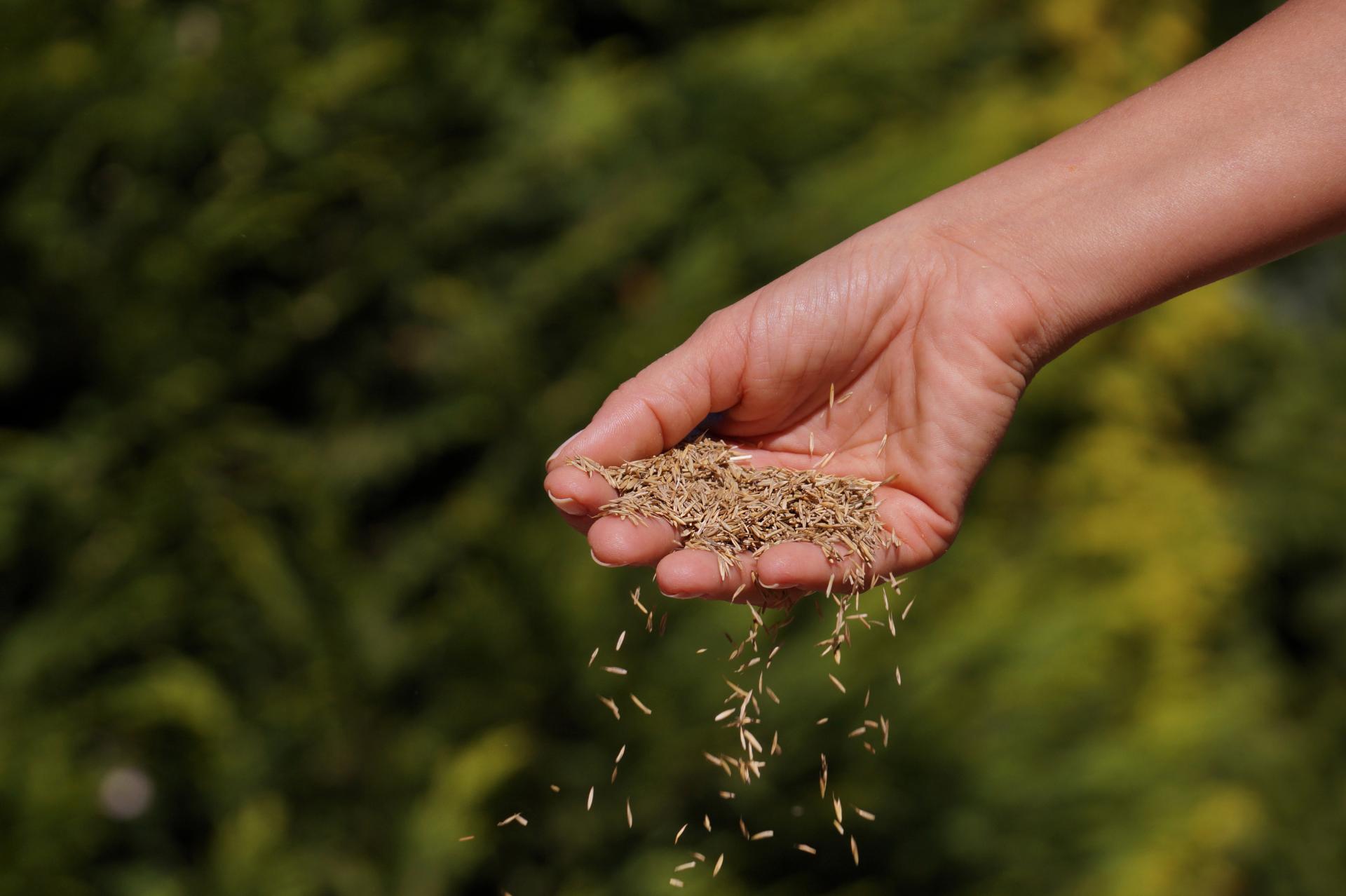
"Can't I Just Plant Grass Seed Now?" — Why May Is the Wrong Time (And When to Do It Right)
Grass seed planted in May will probably sprout — but sprouting and surviving are two very different things. The real problem is that new seedlings won't have enough time to develop deep roots before summer heat and drought stress arrive. Here's why fall is dramatically better for seeding cool-season grass, and what to do with those bare spots in the meantime.
"Can't I Just Plant Grass Seed Now?" — Why May Is the Wrong Time (And When to Do It Right)
Published on LawnMaps.com | Estimated read time: 5 minutes
It's a conversation that happens in a lot of households this time of year. The weather is warm, the lawn has some bare spots, and it just feels like the right time to throw down some grass seed and get things growing.
And to be fair — grass seed planted in May will germinate. You'll see green sprouts coming up within a week or two and think you nailed it.
But here's the problem: what happens next.
The Real Issue Isn't Germination — It's Survival
Planting grass seed in May isn't really about whether the seed will sprout. Cool-season grass seed germinates when soil temperatures are between 50–65°F, and May fits that window — at least early in the month.
The real problem is what that new grass has to face just a few weeks after it sprouts.
When grass seed germinates, the very first thing it does is send up a tiny shoot. That shoot looks like grass, and it feels like progress. But underground, the root system is extremely shallow — we're talking less than an inch deep in those first few weeks. Those roots need time to develop — ideally 6–8 weeks of good growing conditions — before they're strong enough to handle stress.
And in most of the country, stress is exactly what arrives in June and July.
What Summer Does to New Grass
Here's what newly seeded cool-season grass is up against when summer arrives:
Heat stress. Cool-season grasses (fescue, bluegrass, ryegrass) naturally slow down and go semi-dormant when temperatures climb above 85–90°F. Established grass with deep roots can handle this — it's essentially taking a nap and waiting for cooler weather. But new grass with shallow roots has no reserves to draw on. It just struggles.
Drought stress. Summer heat means the top inch or two of soil dries out quickly. Established grass roots reach deeper into the soil where moisture remains. Shallow new roots can't do that — they're entirely dependent on the very top layer of soil staying moist, which in summer means watering every single day just to keep new seedlings alive.
Competition from weeds. Summer is peak season for crabgrass and other warm-season weeds. New grass seedlings are no match for fast-growing summer weeds competing for the same sunlight, water, and nutrients.
The result? A lot of that beautiful green you saw sprouting in May turns brown, thin, or disappears entirely by July. It's not that you did anything wrong — the timing just didn't give it a fighting chance.
So When Should You Seed Cool-Season Grass?
Fall is the single best time to seed cool-season grass — and it's not particularly close.
Here's why fall is so much better:
- Soil temperatures are perfect. After a warm summer, soil temps in early fall are still in that ideal 50–65°F germination range
- Air temperatures are cooling down. New grass isn't immediately facing heat stress — it gets to establish during the most comfortable part of the year
- Weeds are winding down. Most annual weeds like crabgrass are dying off in fall, so new grass isn't competing as hard
- Plenty of time to root before winter. Grass seeded in late August through September has 6–8 weeks of solid growing weather to develop a deep root system before the ground freezes
- Winter actually helps. The freeze-thaw cycle over winter further establishes roots, and the grass comes back strong in spring
The ideal window for overseeding cool-season lawns is late August through mid-October, depending on your region. The further north you are, the earlier you want to start.
What About Warm-Season Grasses?
If you have Bermuda, Zoysia, or another warm-season grass, the timing is actually flipped. Warm-season grasses love heat and go dormant in winter. For those grass types, late spring to early summer (when soil temps are consistently above 65–70°F) is actually the right seeding window. So if your dad has a warm-season lawn in the South, his instinct wasn't far off — though late May to June is still better than early May.
Not sure which type of grass you have? Cool-season grasses stay green in fall and winter but struggle in summer heat. Warm-season grasses go brown/dormant in winter and thrive in summer. That's the simplest way to tell them apart.
"But I Have Bare Spots Right Now — What Do I Do?"
Totally fair question. If you've got bare or thin patches staring at you right now, here are your options:
Option 1: Spot treat and wait for fall
Mark the bare areas, keep them watered so they don't erode, and plan to overseed them properly in late August or September. It feels like a long wait but the results will be dramatically better.
Option 2: Use a temporary cover
For areas where bare soil is a concern (erosion, mud, aesthetics), a thin layer of straw or a temporary erosion mat can protect the soil until fall seeding season.
Option 3: Early May attempt with realistic expectations
If it's very early May and you're in a cooler climate, you can try seeding with the understanding that you'll need to water religiously all summer and some of it may not make it. Go in with realistic expectations and treat it as a partial fix rather than a permanent solution.
Option 4: Sod
If you need an immediate fix, sod is a better summer option than seed. Sod has an established root system that gives it a much better chance of surviving summer stress than seedlings.
The Honest Bottom Line
Your grass seed will probably sprout in May. It'll look promising for a few weeks. But without enough time to develop deep roots before summer heat arrives, a lot of it won't survive to see fall.
It's not that seeding in May is impossible — it's that the odds are working against you. Fall seeding costs the same, requires the same effort, and produces dramatically better results. Save the seed, save your money, and do it right in late summer.
Your lawn will thank you. 🌱
Your Next Step
If you're planning to overseed this fall, start thinking about it now. Check your lawn zones on LawnMaps.com so you know exactly how much seed to buy for each section of your yard — grass seed is sold by square footage coverage, and having your zone measurements ready makes it a simple calculation. You can also track soil temperatures in your LawnMaps dashboard so you know exactly when that late-summer seeding window opens up in your area.
Fall will be here before you know it — and this time you'll be ready.